Academic Staff
Maximilian Burzer
Profile
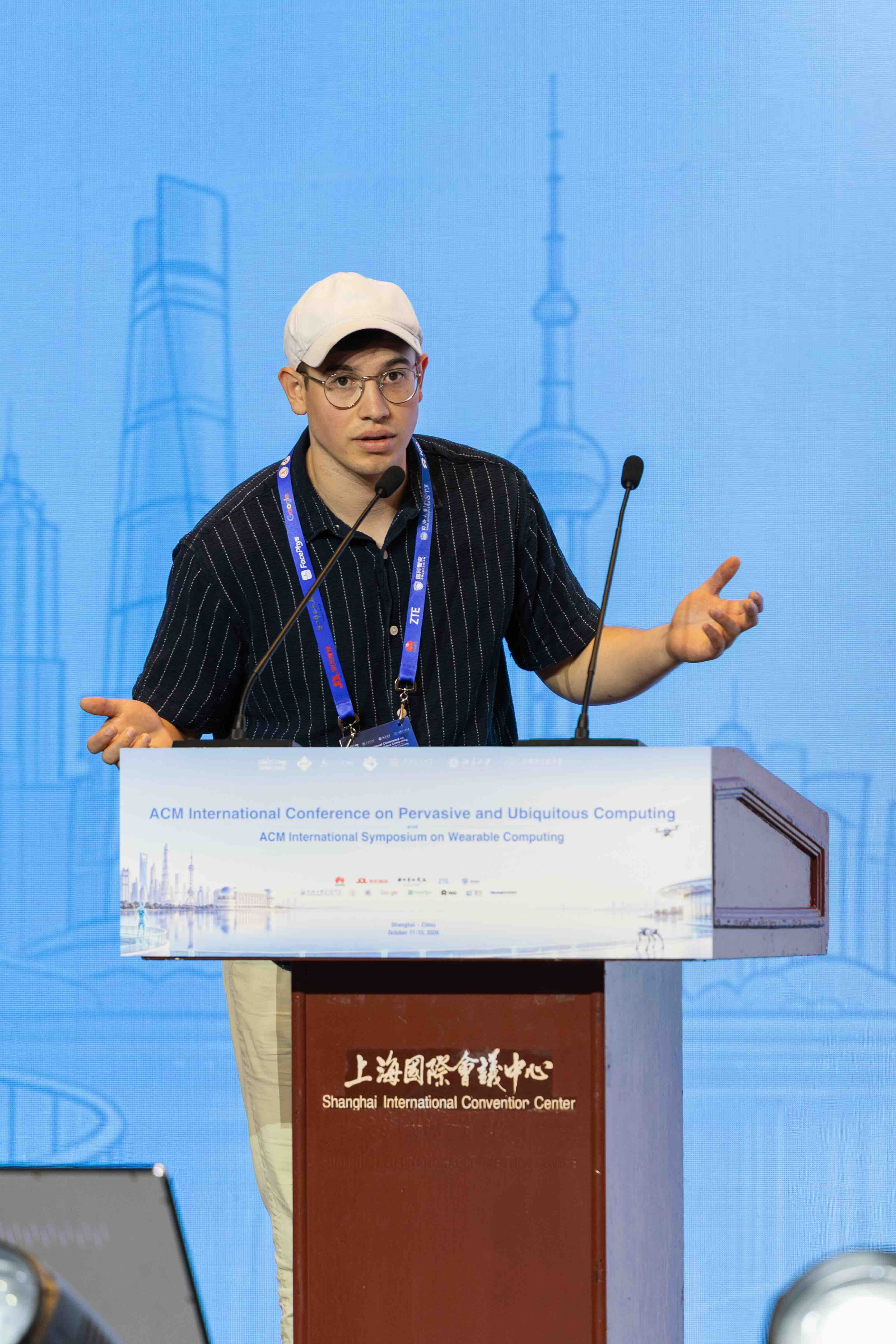
I am a PhD student at the TECO research lab, where I am developing machine learning methods for wearable sensor data, focusing on lightweight model architectures, as well as robust and efficient domain adaptation for varying user physiology, sensor placements, and real-world conditions.
Short CV
- since 2025 PhD Student at TECO
- 2022 – 2025 M.Sc. Computer Science at KIT
- 2023 – 2024 Machine Learning Engineering Intern at prenode
- 2022 – 2023 Software Engineering Working Student in Process Mining at MEHRWERK
- 2018 – 2022 B.Sc. Computer Science at KIT
Research Interests
- Human Activity Recognition
- Bayesian Inference
- Probabilistic Models
- Contrastive Learning
- Representation Learning
- Meta-learning
Projects
BayaHAR
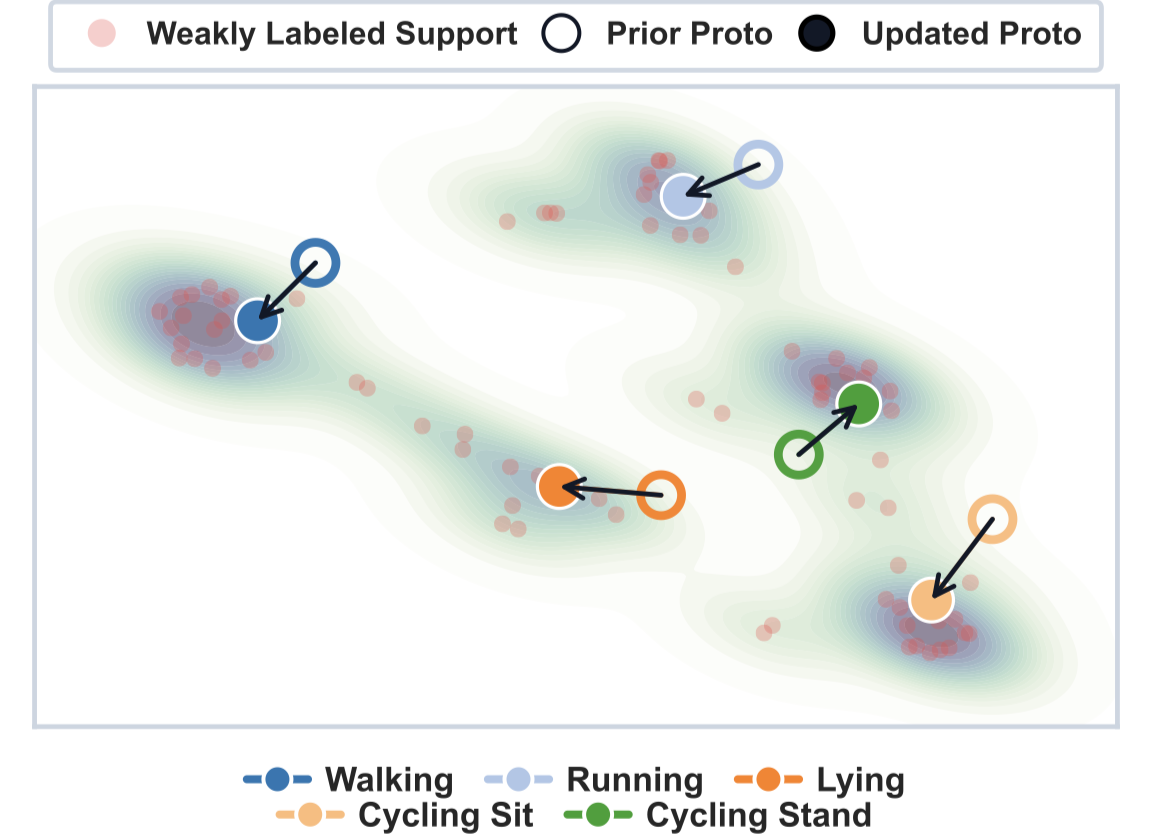
BayaHAR enables lightweight, gradient-free personalization of pretrained wearable HAR models to new users using only a few seconds of labeled or weakly labeled calibration data, supporting efficient and robust on-device adaptation.
WHAR Datasets
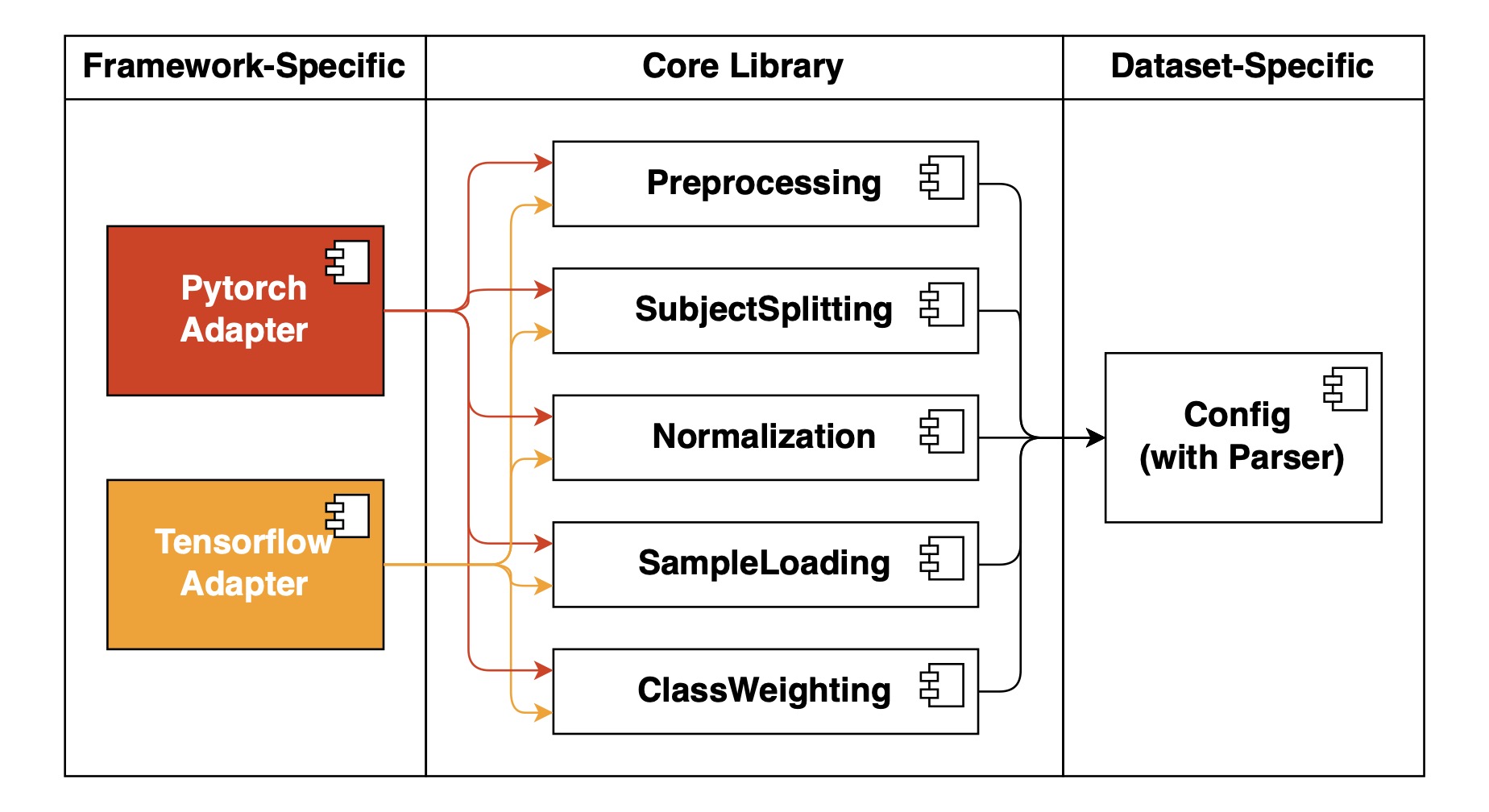
The WHAR Datasets library standardizes formats and preprocessing in Wearable Human Activity Recognition (WHAR) research. It offers a unified, open-source framework with configuration-driven workflows for easier dataset handling and model training. Supporting nine major datasets, library promotes reproducibility, comparability, and efficiency in WHAR research.

HammerHAI
HammerHAI is a European initiative led by HLRS and partners that provides secure, scalable AI and HPC resources for industry and research. As part of the EuroHPC “AI Factories,” it makes compliant AI technologies accessible and supports innovation through consulting, training, and ready-to-use tools.
Theses
Quantifying User-Level Domain Shift in Human Activity Recognition
HAR models often perform well on users represented during training but degrade substantially when applied to unseen users due to differences in individual movement patterns. However, it remains difficult to quantify how large this user-level domain shift is without relying on a trained model. This bachelor’s thesis investigates model-free statistical measures based on time- and frequency-domain sensor features, dimensionality reduction, and clustering/separability analysis. The goal is to develop an interpretable domain-shift metric that correlates with the performance drop of HAR models on unseen users and can help estimate generalization difficulty directly from the data.
Diffusion-Based Personalization for Human Activity Recognition
HAR models often perform well on users represented during training but generalize poorly to unseen users due to differences in individual movement patterns. Collecting sufficient labeled data to retrain or personalize models for every new user is impractical. This master’s thesis investigates Diffusion Models (Flow Matching / Stochastic Interpolants) as a way to generate personalized sensor data from only limited user information. User prototypes will be used to condition and steer the generative process toward specific or previously unseen users. The resulting synthetic data will be used to improve cross-user generalization and enable few-shot personalization of HAR classifiers. Candidates should have strong deep learning foundations, Python and PyTorch skills, and an interest in generative modeling and domain adaptation.
Topic Areas
Publications
Burzer, M.; Riedel, T.; Beigl, M.; Röddiger, T.
2026. Proceedings of the 2026 ACM International Symposium on Wearable Computers, 15–21, Association for Computing Machinery (ACM). doi:10.1145/3830727.3834833
Burzer, M.; King, T.; Riedel, T.; Beigl, M.; Röddiger, T.
2025. Companion of the 2025 ACM International Joint Conference on Pervasive and Ubiquitous Computing, 1315–1322, Association for Computing Machinery (ACM). doi:10.1145/3714394.3756254